Desert Link: Solar Energy for a Sustainable Future
The Tata Province in Morocco faces critical environmental challenges, including water scarcity and desertification, exacerbated by extreme climate events such as the September 2024 floods, which followed six years of severe drought.
Desert Link emerges as a strategic solution to accelerate the country’s energy transition, enhance climate security, and reduce the region’s socio-environmental vulnerability to climate change.

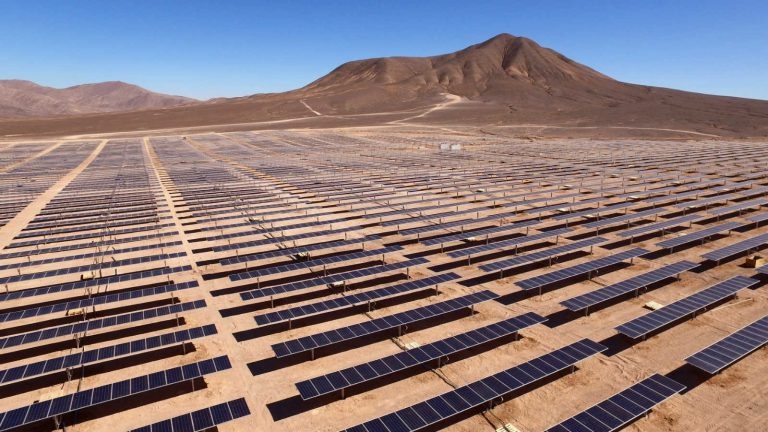
With the construction of a 1.5 million-panel solar farm—one of the largest solar energy projects in the world—the initiative aims to maximize energy efficiency while driving sustainable development in the region.
The project has been meticulously designed to minimize environmental impact, ensuring the preservation of local biodiversity and natural habitats. Additionally, the creation of a green belt with adaptive crops and regenerative techniques will help restore desertified areas and strengthen environmental resilience.
Following the ACM0002 methodology—Grid-connected electricity generation from renewable sources under the Clean Development Mechanism (CDM)—the project is expected to mitigate 1,067,233 tCO2e per year, significantly reducing greenhouse gas emissions and contributing to Morocco’s clean energy transition.
Driving Innovation Through Research & Development
The Desert Link Project will also serve as a hub for technological innovation with the construction of two self-sufficient Research & Development (R&D) centers. These facilities will be equipped with water storage and treatment systems, as well as infrastructure for energy generation and storage, ensuring sustainable and efficient operations.
Sustainable Agriculture for a Regenerative Future
As part of its sustainable land restoration efforts, the project will establish a 200-hectare green belt, featuring 40 hectares of cacti and 160 hectares of Aloe Vera. This initiative will help convert arid landscapes into productive land, fostering ecological regeneration and boosting the region’s environmental resilience.
Strengthening Morocco’s Energy Independence
On a national scale, Desert Link will contribute to Morocco’s energy sovereignty, reducing its reliance on imported fossil fuels and supporting the country’s goal of generating 42% of its electricity from renewable sources by 2025.
Locally, the project is set to attract investment, drive sustainable development, and create direct and indirect job opportunities, stimulating economic growth and social progress in the region


